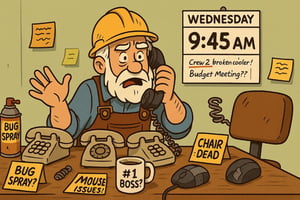
Introduction By 9:45 a.m., my phone had already rung three times.
Introduction
It started as a small thing. A tiny blip on the radar. Something I told myself I’d fix “later.” You know the kind — a billing discrepancy here, a slightly confused client there. Nothing worth losing sleep over.
Well, a few weeks later, that little $500 issue had ballooned into a $5,000 problem, a bruised client relationship, and a headache I could’ve avoided with ten minutes of attention.
As I like to say, it started as a paper cut and ended as a chainsaw accident.

How It All Began
A client called about a small correction on an invoice. Nothing major — a line item looked off by a couple hundred bucks. I was in the middle of juggling three quotes, two crews, and one coffee that had gone cold an hour ago. I told myself, “I’ll get to it later.”
Later turned into next week. Next week turned into the end of the month. Meanwhile, the client got understandably frustrated, thinking I’d gone radio silent. By the time I fixed it, the misunderstanding had spread to scheduling delays, missed approvals, and a conversation that began with, “Gus, we need to talk.”
Turns out, my “minor oversight” caused the client to pause payment on several invoices until they could review everything. That meant delayed cash flow for us, overtime costs for the crews who had to wait on approvals, and a pile of follow-up calls from other clients wondering why their projects were suddenly running late.
That $500 mistake turned into nearly $5,000 in lost time, labor, and goodwill.
The Domino Effect of Doing Nothing
What I learned is that small problems never stay small. They grow quietly while you’re busy fighting louder fires. One missed email becomes a delayed payment. One delayed payment becomes a cash flow issue. Before you know it, you’re patching holes in a dam instead of building something that lasts.
In project management, procrastination doesn’t look dangerous — it looks harmless. But every “I’ll fix it later” adds weight until the system creaks.
For me, that $500 billing mistake created days of back-and-forth emails, lost time, and a dent in client trust. It wasn’t just about the money; it was about the energy I could’ve spent moving projects forward instead of cleaning up a preventable mess.
How to Stop $500 Problems From Becoming $5,000 Problems
Here’s what I’ve learned — and what I do differently now:
- Deal with small issues immediately.
If something looks off, fix it before the day ends. I keep a “same day” rule for corrections or clarifications. It takes five minutes now or five hours later. Easy choice. - Track everything — even the small stuff.
Use a central place to log client notes, billing questions, and schedule updates. Whether it’s a spreadsheet, a whiteboard, or project management software, don’t rely on memory. Memory lies. Systems don’t. - Communicate early and clearly.
When a client flags something, acknowledge it right away — even if you don’t have the answer yet. Silence is the quickest way to turn small confusion into full-blown suspicion. - Review invoices and projects weekly.
I set aside 30 minutes every Friday to check that all billing, scheduling, and task updates are accurate. It’s a sanity check that saves a fortune. - Empower your team to catch errors.
You’re not the only set of eyes in the business. Encourage your office manager, drafter, or field crew to speak up if something looks wrong. Problems spotted early are the cheapest ones to fix.
The Real Cost of Small Mistakes
When you’re running a business, every decision has compound interest. Addressing issues early saves money — ignoring them multiplies the cost.
That doesn’t just apply to billing. It’s everything: unanswered client messages, small scheduling errors, unchecked field reports. Each one might seem tiny on its own, but together they chip away at efficiency, reputation, and sanity.
Having the right tools and discipline in your project management workflow makes it easy to catch small errors before they snowball. Whether it’s tracking communication, setting reminders, or using clear approval steps, the goal is simple — don’t give problems time to grow teeth.
Reflection
Being a business owner means learning when to zoom out — to see the bigger picture and not let pride or busyness keep you from addressing small stuff. I used to think ignoring a $500 problem was saving me time. Turns out, it just delayed the $5,000 bill that came later.
Now, I make it a rule: if something feels off, I fix it right away. No more “later.” My coffee might still go cold, but at least my balance sheet stays warm.
Conclusion
In time management and client communication, being proactive isn’t about perfection — it’s about prevention. You don’t need to solve everything instantly, but you do need to acknowledge and track it.
The moral of the story? The small fires burn the hottest if you don’t stomp them early. Fix the paper cut before it becomes a chainsaw accident. Your team, your clients, and your wallet will thank you.
It’s cheaper to fix it now than to apologize later.